
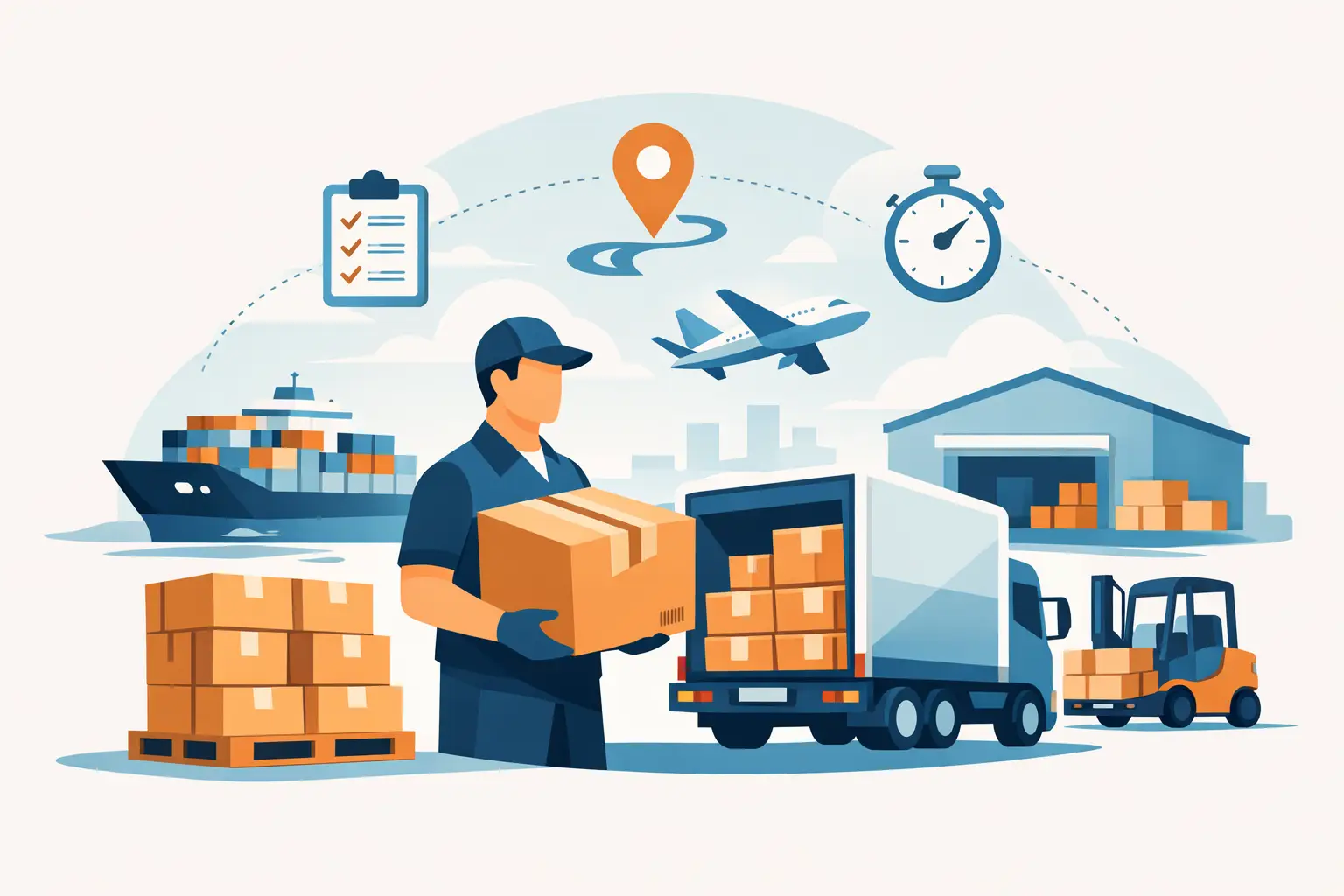
If you are placing a larger purchase, the first question is usually not what carrier gets used. It is how bulk orders ship without turning into a mess of delays, split boxes, damaged inventory, or confusing tracking. The short version is simple: bulk shipments move through more checkpoints than single-item orders, and the bigger the order, the more planning matters.
That matters whether you are buying for resale, stocking up for a season, supplying a storefront, or just trying to avoid the stop-and-start rhythm of small repeat purchases. A bulk order can move fast, but only when the shipper has the right packaging, labels, routing, and warehouse process behind it. When any one of those pieces is weak, bigger orders expose the problem fast.
How bulk orders ship in real life
Most people imagine one giant box going from a warehouse straight to a door. Sometimes that happens, but often it does not. Bulk orders ship in one of three common ways: as multiple parcel packages, as palletized freight, or as a hybrid where part of the order goes by standard parcel and the rest goes by freight.
Parcel shipping is common when products are compact, durable, and easy to break into separate cartons. That can be faster in some situations because it uses the same networks carriers already run every day. The trade-off is that one order may generate several tracking numbers, and those cartons do not always arrive together.
Freight shipping becomes more likely when the order is heavy, oversized, or better protected on a pallet. This is common for wholesale inventory, dense packaged goods, or anything where repeated handling would increase the risk of damage. Freight can be more stable for large volumes, but it usually involves appointments, dock coordination, and less flexibility than normal parcel delivery.
Hybrid shipping sits in the middle. A seller may send high-value or fragile units one way and standard stock another way. This is not unusual. It is often the cheapest practical option when an order contains mixed product sizes or weights.
What decides the shipping method
Weight is the obvious factor, but it is not the only one. Dimensions matter just as much. Carriers charge based on size as well as actual weight, so lightweight but bulky goods can become expensive fast. Order value also matters because higher-value shipments may need stronger packaging, signature requirements, or insurance treatment that changes the whole process.
Distance plays a bigger role than buyers think. A large shipment going two states over may stay in parcel lanes and move quickly. The same shipment going coast to coast might be shifted into freight or split across fulfillment points. Inventory location matters too. If all units are not sitting in one warehouse, the order may ship in waves.
There is also the question of destination. A commercial address with receiving staff is easier than a rural home with limited access. Apartments, gated properties, schools, military addresses, and businesses with narrow delivery windows all create different handling rules. That does not mean shipping stops. It means planning gets tighter.
Why bulk orders are often split
Buyers sometimes see two or three tracking numbers and assume something went wrong. Usually, splitting is a control move, not a mistake. When a shipment is too heavy for one box, too fragile to stack together, or too valuable to bundle in a single carton, splitting reduces risk.
It also helps with carrier limits. Every parcel carrier has thresholds for weight, dimensions, and surcharge triggers. Once a box gets too large or too heavy, costs rise and handling quality often drops. Breaking the order into cleaner cartons can protect the goods and keep the shipment moving through automated sort systems instead of manual exception channels.
There is a downside. Split orders can create staggered delivery. One carton may land today, another tomorrow, and one more after a weekend delay. That feels sloppy if you are not expecting it, but from the shipping side it can be the smarter call.
Packaging is not a small detail
For bulk shipping, packaging is part of the logistics strategy. A seller that handles high-volume fulfillment well is not just throwing more tape on a box. They are matching carton strength, void fill, product orientation, and label placement to the shipment type.
Corrugated box quality matters. Inner dividers matter. Pallet wrap tension matters. Even weight distribution matters. If all the heavy product is stacked to one side, that carton is more likely to burst, crush, or get flagged in transit. The same goes for pallets that are poorly balanced or stacked too high.
This is where experienced fulfillment teams separate themselves from sellers that are fine with small orders but weak at scale. A warehouse can look efficient at ten orders a day and fall apart at one hundred. Bulk shipping exposes that fast.
Tracking, scans, and the quiet gap buyers hate
One of the most misunderstood parts of shipping is the scan gap. A label gets created, but there is no movement update for a while. For bulk orders, that gap can be longer because the shipment may be waiting for pickup, linehaul transfer, pallet breakdown, or induction into a regional carrier network.
That does not automatically mean the shipment is stalled. It often means the physical package is moving before the system catches up. Freight is even more prone to this because milestone tracking is less granular than parcel tracking. You may see pickup, terminal arrival, linehaul departure, and delivery appointment, but not the blow-by-blow updates people expect from regular ecommerce orders.
The practical move is to judge tracking by pattern, not by panic. A quiet period followed by multiple updates is common. Repeated exception notices, address issues, or damage scans are the real warning signs.
Speed depends on more than the shipping option
Buyers like to focus on overnight, two-day, or express labels. That matters, but it is only one layer. Bulk orders ship on two clocks: processing time and transit time. Transit starts when the carrier has the shipment. Processing includes picking, packing, quality checks, carton building, paperwork, and staging.
For a large order, processing can take longer than the trip itself. That is not always bad. It can mean the warehouse is verifying counts and packing correctly instead of rushing out a sloppy shipment. The trade-off is that a premium shipping service cannot fix a fulfillment team that is behind, disorganized, or waiting on inventory.
This is why realistic expectations matter. Fast shipping is not just about a carrier promise. It is about whether the order was built right before it ever touched the carrier network.
Delivery risks change at larger volume
Small shipments usually have one main risk: delay. Bulk shipments have several. Damage risk increases because there is more mass moving through the network. Misroutes matter more because corrections take longer. Partial delivery creates confusion. If freight is involved, missed appointments can add storage fees or extra handling.
Weather, peak season congestion, and regional staffing issues also hit larger shipments harder. A lightweight parcel can sometimes get rerouted quickly. A palletized shipment has fewer easy workarounds. That does not make freight unreliable. It just means flexibility drops as shipment size rises.
Good shippers account for this upfront. They build in packaging tolerance, route awareness, and realistic delivery windows rather than promising miracles.
How to make a bulk shipment go smoother
If you are ordering in volume, clean details matter. Make sure the ship-to name, phone number, and address format are correct. If it is going to a business, include suite numbers, dock notes, or receiving hours. If access is difficult, say so early. The fewer assumptions built into the shipment, the fewer problems appear at the last mile.
It also helps to ask whether the order will ship in one piece or multiple cartons. That one question prevents a lot of confusion later. If timing matters, ask whether all items are in stock at the same location. A bigger order is only as fast as its slowest inventory segment.
For repeat buyers, consistency matters even more than speed. A seller that ships large orders the same way every time is easier to work with than one that occasionally ships fast and occasionally improvises. Predictability saves time, money, and headaches.
At a serious volume, shipping is not just a checkout step. It is part of the product experience. Buyers remember whether the order arrived complete, protected, and easy to receive. That is the real answer to how bulk orders ship – not just by truck or carrier, but by process. When the process is tight, big orders feel controlled instead of risky. When it is loose, every extra unit adds friction. If you are spending more, expect more from the way it moves.