
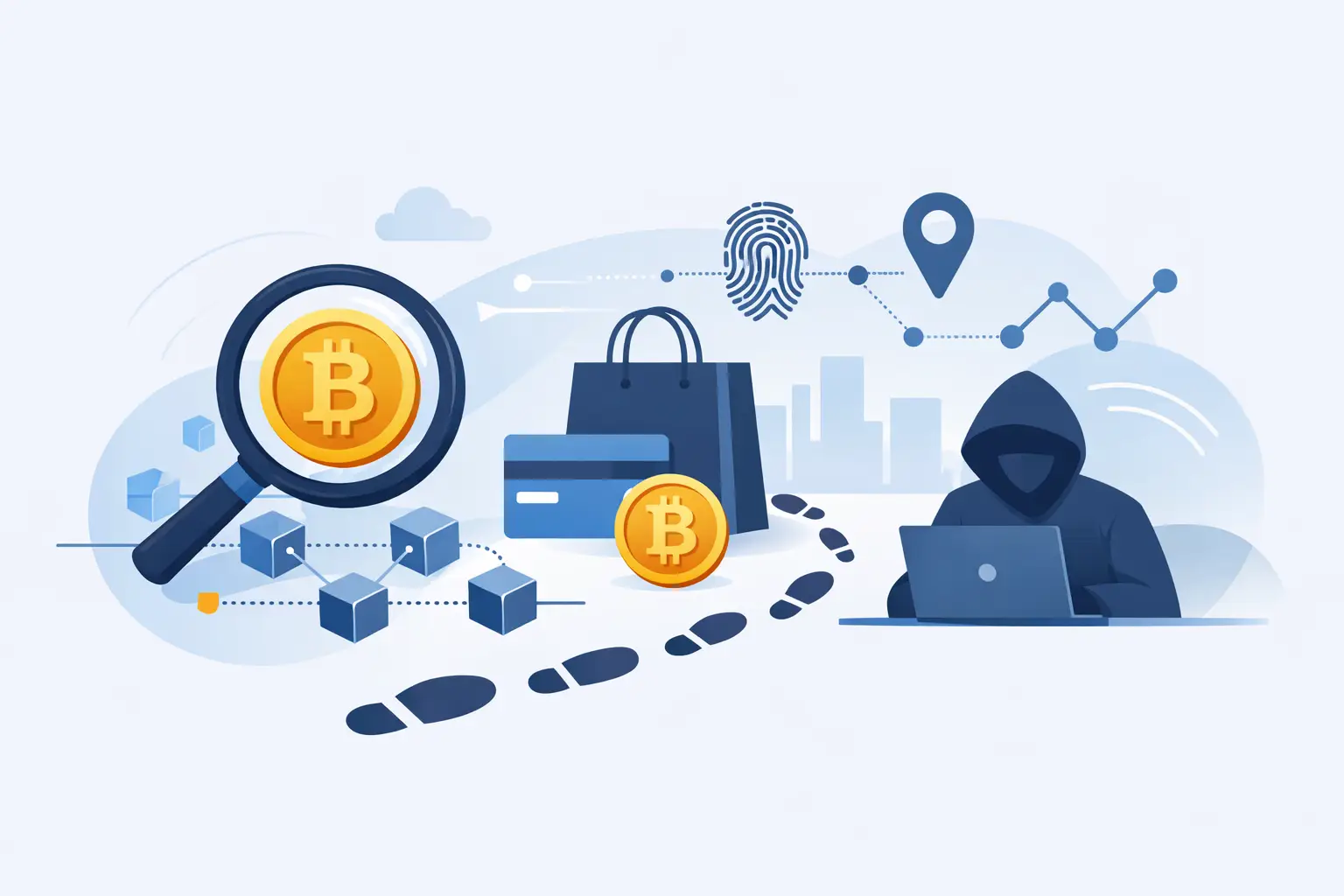
You send crypto, the order clears, and the first thought hits right after checkout – can crypto purchases be traced? That question matters more than most buyers realize, because crypto is not one thing. Some transactions are easy to follow on a public ledger. Others are harder to connect to a real person. The real answer is simple: yes, crypto purchases can often be traced, but whether they can be tied back to you depends on the coin, the wallet trail, and the mistakes made before and after payment.
Can crypto purchases be traced on the blockchain?
If you pay with a public blockchain asset like Bitcoin, every transaction is recorded permanently. That does not mean your full name appears on-chain, but it does mean wallet addresses, transfer amounts, timestamps, and movement between wallets are visible. Anyone with the transaction hash can follow the path.
That is where a lot of people get the wrong idea. They hear “crypto” and assume “untraceable.” In reality, Bitcoin and many other popular coins are better described as transparent by default and private only in limited ways. A wallet address is pseudonymous, not invisible.
If that address ever gets connected to your identity, the trail gets much easier to map. That connection can happen through an exchange account, a payment processor, a reused wallet, an email trail, or shipping details tied to a purchase. Once one piece of identity data touches the chain, the rest of the transaction history can start to look a lot less private.
Why people think crypto is anonymous
The confusion comes from the fact that blockchain wallets are not bank accounts with names printed on them. You can create a wallet without walking into a branch, showing ID, or filling out credit paperwork. That feels private compared with debit cards or PayPal.
But private is not the same as anonymous. Public ledgers create a permanent map of movement. Investigators, exchanges, analytics firms, and payment services can analyze wallet behavior, cluster addresses, and identify patterns. If funds move from a KYC exchange account to a personal wallet and then to a merchant wallet, there is already a trail to work with.
In other words, crypto can remove some of the obvious banking fingerprints, but it also creates a record that does not disappear. That trade-off is the part many buyers miss.
Where tracing usually happens
For most people, tracing does not begin with the blockchain alone. It begins at the points where crypto meets real-world identity.
The biggest exposure point is the exchange. If you bought crypto on a platform that required your legal name, ID, bank account, or selfie verification, that platform has a record of your purchase. If the same funds later move to a merchant, analysts can often follow the path. Even if the merchant never knows your real name, the transaction may still be linkable.
The second weak point is wallet reuse. If you keep sending payments from the same wallet, you create a pattern. Repeated use makes it easier to group transactions together and build a profile of your activity.
The third weak point is checkout data. If a purchase involves an email address, shipping name, phone number, delivery address, or IP logs, privacy depends on much more than the coin used. A buyer can focus on crypto and still expose themselves through the order flow.
Then there is behavior. Sending exact amounts from a freshly funded exchange wallet, transacting at predictable times, or moving funds through obvious paths can all make analysis easier. Tracing is often less about one magic tool and more about piecing together ordinary details.
Which cryptocurrencies are easier to trace?
Bitcoin is the best-known example of a traceable blockchain. Ethereum and many major tokens are also highly transparent. On these networks, transactions are public, wallet activity is visible, and the ledger is easy to inspect.
Privacy-focused coins were built to reduce that transparency. Some cryptocurrencies use features designed to obscure wallet balances, sender information, or receiver information. That can make blockchain analysis harder, sometimes much harder. But harder does not mean impossible in every case, and privacy can still break down if the user exposes themselves elsewhere.
If someone buys a privacy coin through a verified exchange account, then uses the same devices, emails, shipping details, or account habits tied to their identity, privacy is no longer just a blockchain question. The chain might reveal less, but the broader purchase trail can still reveal plenty.
That is why blanket claims are usually nonsense. Saying “crypto is anonymous” is too broad. Saying “all crypto is fully traceable” is also too broad. The truth depends on the asset and the full path around it.
Can law enforcement trace crypto purchases?
Yes, in many cases. Public blockchain analysis is now a mature field. Investigators can track wallet activity, issue subpoenas to exchanges, analyze merchant processors, and connect transaction histories with account records. They do not always need to crack the chain itself. Sometimes they just need one verified exchange account, one reused address, or one merchant data point.
That said, outcomes vary. A transaction on a public chain funded from a major exchange is a very different situation from funds moved through multiple wallets with stronger privacy practices and minimal identity exposure. There is no one-size-fits-all answer.
It also depends on what “traced” means. If the question is whether someone can see that a transaction happened, the answer is often yes on public chains. If the question is whether they can prove that you personally made it, that usually depends on off-chain evidence.
The part buyers forget – merchants leave records too
A lot of privacy talk stays focused on wallets and blockchains, but merchants can create just as much exposure. If a store keeps payment records, order logs, communication history, and shipping details, that data can matter as much as the blockchain trail.
Even when a site markets crypto checkout as private, what really matters is the full process. Does the order require personal details? How is communication handled? Is the payment wallet unique for each order or reused? Are order confirmations tied to identifying information? Those details shape the real privacy picture.
That is why smart buyers do not judge privacy by the payment button alone. They look at the whole chain of information from funding source to delivery.
So, can crypto purchases be traced back to you?
Sometimes yes, sometimes not easily, and sometimes only partly. A blockchain transaction can almost always be traced in the sense that it can be followed. The harder question is attribution. Can that wallet movement be connected to your real identity with confidence?
If you bought on a KYC exchange, used a transparent coin, reused wallets, and attached personal order information, the answer may be much closer to yes than you think. If the purchase path involved stronger privacy choices and fewer identity links, attribution becomes harder. But harder is still not the same as impossible.
That distinction matters. People often ask whether crypto is traceable as if the answer should be absolute. It is not. Crypto exists on a spectrum from very transparent to more privacy-focused, and user behavior usually decides how exposed the purchase really is.
What this means for anyone paying with crypto
The practical takeaway is straightforward. Crypto should not be treated like a magic invisibility cloak. It can reduce dependence on banks and card processors, but it does not erase records. In many setups, it creates a clearer transaction history than buyers expect.
If privacy is the goal, the coin is only one factor. Funding source, wallet hygiene, merchant practices, delivery data, device behavior, and account history all matter. Weakness at any one point can undermine the rest.
That is also why experienced buyers pay attention to the entire checkout flow, not just the wallet address on the payment page. On stores like Zazaland.shop, where the appeal is fast checkout and discreet payment, the real question is not whether crypto sounds private. The question is how much of the surrounding process protects or exposes the buyer.
Crypto can be useful for reducing some kinds of financial visibility. It can also leave a permanent trail. Both things are true at the same time, and anyone spending serious money should understand that before they hit send.
If you want the shortest honest answer, here it is: crypto can give you distance from traditional payment rails, but it does not give you automatic anonymity. The details decide everything, and details are where people usually get sloppy.