If you have ever looked at a cart menu, edible label, or tincture description and thought these two compounds sound similar but hit completely different, you are asking the right question. The difference between CBD and THC matters because one is mostly chosen for a non-intoxicating effect, while the other is the cannabinoid people usually associate with getting high.
A lot of product confusion starts with the plant itself. CBD and THC both come from cannabis. They also interact with the body in related ways. But the experience, intensity, side effects, legal status, and reasons people buy them can be very different. If you are trying to figure out what fits your goals, the details matter more than the hype.
What is the difference between CBD and THC?
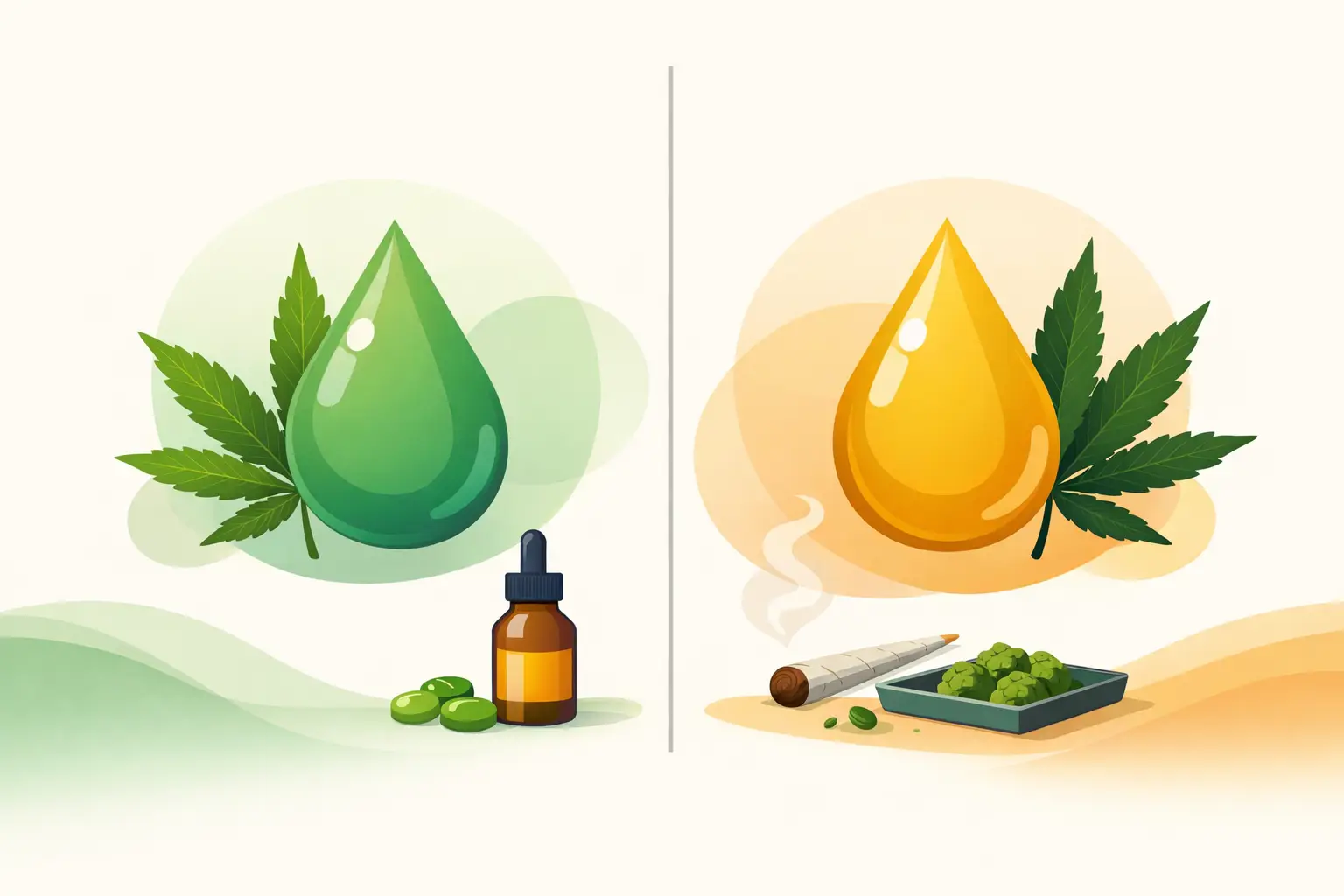
At the simplest level, THC is the main psychoactive compound in cannabis, and CBD is not considered intoxicating in the same way. THC changes perception, mood, and coordination more noticeably. CBD is usually sought out by people who want a calmer, more clear-headed experience without the classic cannabis high.
That sounds clean on paper, but real-world use is more nuanced. Dose changes everything. Product format matters. Your tolerance matters. Even the same cannabinoid can feel different depending on whether it is in a gummy, vape, flower, capsule, or tincture.
THC, or tetrahydrocannabinol, binds more strongly to the receptors in the body that influence mood, appetite, memory, and perception. That is why it is usually linked to euphoria, altered senses, stronger body effects, and impairment. CBD, or cannabidiol, interacts more indirectly. It does not typically produce the same mental shift, and many people describe it as subtle unless the dose is dialed in correctly.
How CBD and THC feel in real use
The easiest way to understand the difference is to focus on effects instead of chemistry terms.
THC is usually chosen for a noticeable experience. Depending on the dose and strain profile, it may feel euphoric, heavy, giggly, spacey, sleepy, hungry, creative, or overstimulating. Some people want exactly that. Others take a little too much and end up anxious, foggy, or glued to the couch.
CBD is usually chosen for balance. People often use it when they want to take the edge off, settle down, or support relaxation while staying functional. That does not mean CBD always feels dramatic. In many cases, it is more of a background effect than a front-and-center one.
There is also a common middle ground. Some people prefer products that combine both cannabinoids because CBD may soften some of THC’s sharper edges. A balanced ratio can feel smoother than high-THC products alone. But ratios are not magic. A product with a lot of THC can still feel very strong, even if it includes CBD.
Why people choose one over the other
A lot of buyers are not looking for a science lecture. They want to know what to buy for the result they want.
People usually pick THC when they want a stronger mood shift, a recreational high, a heavier body effect, or a more obvious edible or vape experience. It is often the choice for nighttime use, social use, or situations where the psychoactive effect is the point.
People usually pick CBD when they want to stay more clear-headed, avoid feeling too high, or try a cannabis-derived product without major intoxication. It is often the choice for daytime use, first-time users, or people who are sensitive to THC.
The overlap is where things get interesting. Some people find pure CBD underwhelming and prefer at least a little THC. Others find even small amounts of THC too intense and stick with broad-spectrum or isolate CBD products. There is no single best option. It depends on your tolerance, your body, and whether you want to feel altered or stay steady.
The legal difference between CBD and THC
This is one area where people make expensive mistakes.
In the US, hemp-derived CBD is more widely available if it contains no more than 0.3% delta-9 THC by dry weight under federal rules. But state laws still vary, and product categories get messy fast. Some CBD products contain trace THC. Some are broad-spectrum and claim no THC. Some are isolate-based and aim for pure CBD only.
THC is regulated much more tightly. Marijuana-derived THC remains federally illegal, even though many states allow medical or adult-use sales. That means legality depends heavily on your location and the exact form of THC involved.
There is also confusion around hemp-derived intoxicating cannabinoids such as delta-8 or certain converted compounds. People often treat them as a legal shortcut, but the rules shift constantly and enforcement is not always predictable. If legality matters to you for work, travel, or testing, do not assume the label tells the whole story.
Drug testing changes the decision
For some buyers, this is the only section that matters.
THC is the main cannabinoid associated with failing a drug test. If you are using THC products, there is a real risk of testing positive. That risk goes up with regular use, higher doses, and edibles.
CBD is not usually the target of standard drug screens, but that does not make every CBD product risk-free. Full-spectrum CBD may contain enough THC to create problems over time, especially with repeated use. Mislabeling also happens. If avoiding THC is critical, broad-spectrum or isolate products are usually the safer lane, but even then, zero-risk claims should be treated carefully.
Side effects and trade-offs
Neither cannabinoid is perfect, and both can disappoint you if the product or dose is wrong.
THC side effects can include anxiety, dry mouth, red eyes, faster heart rate, short-term memory issues, dizziness, and impaired coordination. For some users, especially beginners, too much THC turns a good night into a long, uncomfortable one.
CBD side effects are usually milder, but they can still happen. Some people report drowsiness, stomach upset, appetite changes, or a flat feeling if the dose is too high. It can also interact with certain medications, which is one reason blanket wellness claims around CBD should always be viewed with some caution.
The trade-off is simple. THC is usually stronger and more noticeable, but also more likely to cause impairment and paranoia. CBD is usually gentler and easier to fit into daily life, but some users expect more than it actually delivers.
Product types make a big difference
The cannabinoid is only part of the story. Delivery method changes the whole experience.
Vapes and flower hit faster, so both THC and CBD effects show up quickly and are easier to adjust in the moment. Edibles take longer, last longer, and are where many people overdo THC because they think nothing is happening and take more. Tinctures sit somewhere in the middle, while capsules feel more controlled but less immediate.
A 10 mg THC gummy and a CBD vape are not comparable products, even if both come from cannabis. That is why reading only the front label is not enough. You need to know the dose per serving, total cannabinoid content, and whether the product is full-spectrum, broad-spectrum, or isolate.
How to choose without wasting money
If you are deciding between CBD and THC, start with your goal, not the trend.
If you want a psychoactive effect, THC is the obvious lane. If you want little to no intoxication, start with CBD. If you want something in between, a balanced product may make more sense than going all in on one side.
Start low, especially with THC. That advice gets repeated for a reason. A low dose can be adjusted. A high edible dose cannot be untaken. With CBD, expectations should be realistic. Some people feel a clear benefit. Others need time, consistency, or a different format before they notice much.
Quality matters too. Clean labeling, actual cannabinoid amounts, and product consistency are what separate a decent experience from guesswork. If you are shopping options at Zazaland.shop, the smartest move is still to read the specs, compare strengths, and choose based on the effect you actually want instead of chasing the loudest product title.
Difference between CBD and THC for beginners
For beginners, the best rule is not to confuse stronger with better.
THC is not automatically the right choice just because it is more famous. CBD is not automatically the better choice just because it sounds safer. The right pick depends on whether you want a buzz, whether you need to stay functional, how sensitive you are, and how much uncertainty you are willing to tolerate.
A lot of experienced users end up appreciating both for different reasons. CBD can make sense for lighter, more controlled use. THC can make sense when you want a clear, unmistakable effect. The smart move is knowing which lane you are stepping into before you take the first hit or eat the first gummy.
If you remember one thing, make it this: CBD and THC may come from the same plant, but they are not interchangeable, and choosing well starts with being honest about the experience you actually want.