
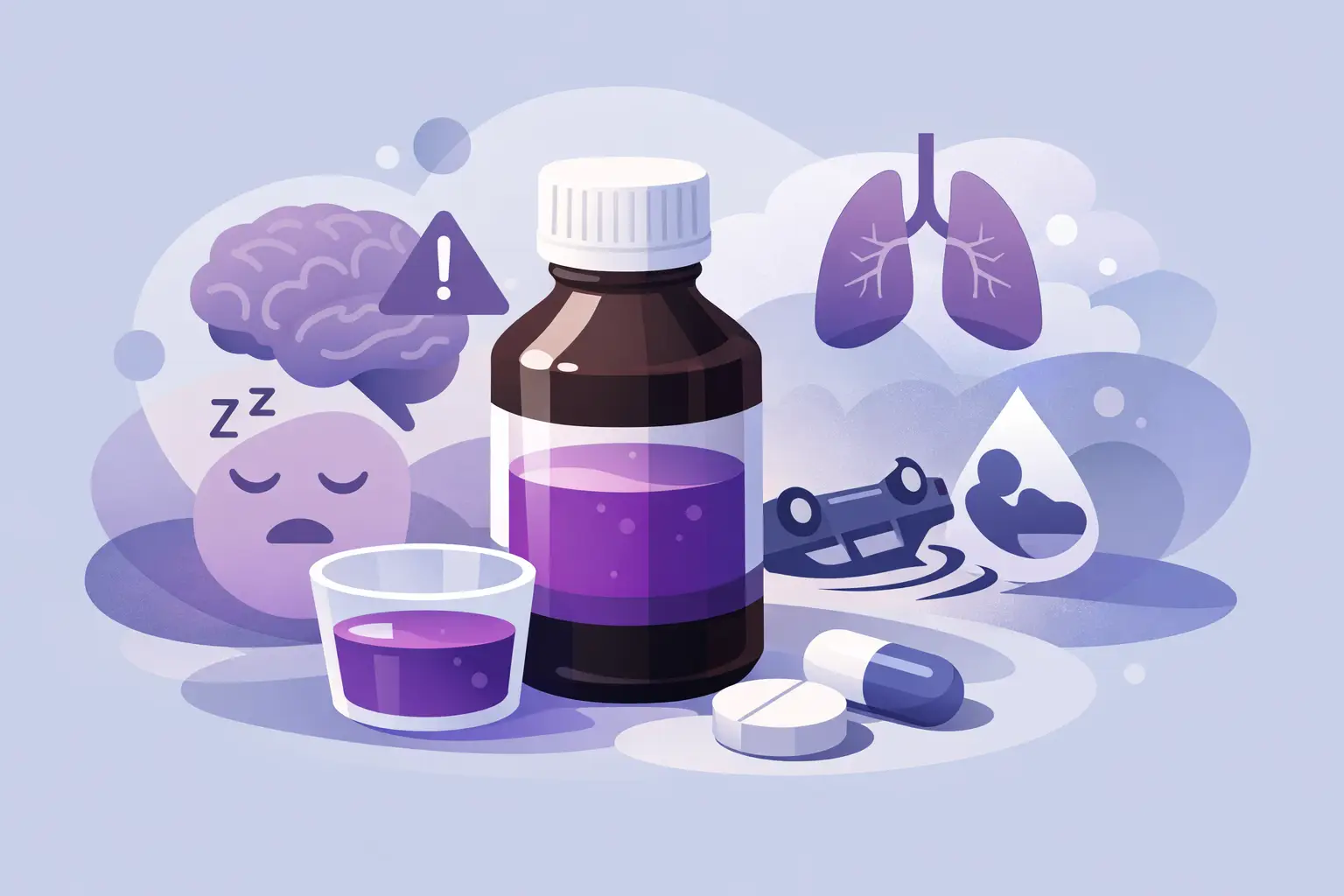
Some people talk about syrup like it is just another easy add-to-cart item. It is not. Codeine syrup risks explained in plain English starts with one fact a lot of buyers underestimate – this is an opioid product that can slow breathing, cloud judgment, and turn a casual habit into a real medical emergency faster than most people expect.
That matters even more in online markets, where the gap between what a label says and what a bottle actually contains can be wide. A person might think they are buying something familiar, then end up dealing with stronger-than-expected effects, contamination, or a fake mix entirely. If you are around codeine products, the real danger is not just “getting too high.” It is stacking bad decisions, bad sourcing, and bad timing until the risk gets serious.
What codeine syrup actually does
Codeine is an opioid. In syrup form, it is often combined with other active ingredients, depending on the product. Some formulas include promethazine, some include acetaminophen in other codeine products, and some illicit bottles are designed to imitate prescription brands without matching what would be in a real pharmacy bottle. That difference matters because the risk profile changes with the ingredients.
Codeine itself can make you feel sedated, relaxed, warm, drowsy, or mentally slowed down. For some users, that is the whole appeal. But the same effect that feels mellow at one dose can become dangerous at a higher one, especially when tolerance is low or the person mixes it with alcohol, benzos, sleep meds, or other opioids. The line between “felt it” and “too much” is not always obvious in the moment.
Another problem is delayed judgment. Syrup can come on in a way that feels smooth rather than harsh, which leads some people to redose before the full effect lands. That is how people get themselves in trouble – not always with one reckless move, but with a series of small ones that feel manageable until they are not.
Codeine syrup risks explained by the body, not the hype
The biggest risk is respiratory depression. That means breathing slows down too much. Opioids can reduce the brain’s drive to breathe, and codeine is no exception. If enough is taken, or if it is mixed with other depressants, breathing can become dangerously shallow. A person may look deeply asleep but actually be slipping into overdose.
Common warning signs start smaller. Heavy drowsiness, nausea, vomiting, dizziness, confusion, constipation, itching, and poor coordination are all possible. Some people also get headaches or feel sick to their stomach in a way that makes them think the batch is bad, when the issue may simply be opioid effects hitting harder than expected.
Then there is individual metabolism. Codeine is converted in the body into morphine, but not everybody processes it the same way. Some people convert it faster and more aggressively, which can make a dose hit much stronger than expected. Others metabolize it less efficiently and may chase effects by taking more. Neither situation is predictable just by looking at the bottle.
That is one reason codeine can be riskier than people assume. Two buyers can take the same amount and get very different outcomes. One feels lightly sedated. Another gets dangerously suppressed.
Mixing is where a lot of bad outcomes start
If there is one pattern behind many opioid emergencies, it is mixing. Codeine syrup gets much more dangerous when it is combined with alcohol, Xanax-type drugs, other benzodiazepines, sleeping pills, muscle relaxers, gabapentinoids, or additional opioids. Each of those can push sedation further. Together, they can knock down breathing in a way that catches people off guard.
Promethazine combinations add another layer because promethazine itself is sedating. Some people treat that like part of the vibe. The body does not care about the vibe. Sedation stacks, and stacked sedation is exactly how people stop responding.
Even cannabis can complicate things. It does not depress breathing in the same way opioids and benzos do, but it can increase confusion, dizziness, and impairment. That matters when someone is already nodding out, dehydrated, or struggling to keep track of how much they have taken.
People also forget about everyday products. Cold medicine, allergy pills, and over-the-counter sleep aids can pile on sedation. The risk is not only in obvious party combinations. It can show up in ordinary medicine-cabinet overlap too.
The fake bottle problem is real
Online buyers already know labels can be part of the game. With codeine syrup, counterfeit products are one of the biggest hazards. A bottle can look clean, sealed, branded, and still be wrong. It may contain inconsistent dosing, a different opioid, extra sedatives, or contaminants that have nothing to do with the original formula.
This is where “trust me bro” sourcing gets expensive fast. A fake bottle is not just disappointing. It can be the reason a familiar amount suddenly feels wildly stronger, dirtier, or more dangerous. Some counterfeit liquids are underdosed, which pushes people to drink more. Others are overdosed, which means the same behavior that felt normal before can suddenly become life-threatening.
For buyers who care about discretion and convenience, it is easy to focus on shipping, checkout, and appearance. But none of that tells you whether the contents match the claims. In this category, presentation can be polished while the chemistry is a mess.
When use starts shifting from casual to risky
A lot of people do not identify a problem because they are not using every day. But dependency does not always announce itself with obvious chaos. Sometimes it starts with planning around the bottle, needing more to get the same effect, feeling off without it, or using it to smooth out stress, sleep, or social discomfort.
Tolerance can build. Once that happens, people often raise the amount without fully adjusting their sense of danger. That is a bad trade. The pleasant effects may plateau while the overdose risk keeps climbing, especially if other substances are in the mix.
Watch for patterns like redosing sooner, using alone more often, hiding how much is being used, or treating syrup as the default fix for a rough day. Those are not moral failures. They are signals that the relationship with the drug is changing.
Who faces higher risk
Some people have less room for error from the start. Anyone with asthma, COPD, sleep apnea, or other breathing issues is at higher risk. The same goes for people taking benzos or sleep medication, people with low opioid tolerance, and anyone using alone with nobody around to notice overdose signs.
Younger users can be especially vulnerable because experience in other drug categories does not translate neatly to opioids. Being comfortable with weed, psychedelics, or stimulants does not mean someone understands how opioid suppression can sneak up on them. Older adults may also be at higher risk because of medication interactions and slower recovery from respiratory problems.
There is also the mental side. If someone is already depressed, impulsive, or using substances to numb out, syrup can become part of a pattern that increases the chance of accidental overdose or other harm. The bottle may look simple. The context around it rarely is.
Codeine syrup risks explained in real-life terms
The practical version is this: the danger usually does not arrive like a movie scene. It often looks like a person who is too sleepy to hold a conversation, breathing slower than normal, slumping, vomiting, or becoming hard to wake. Friends may think they just need to sleep it off. That assumption is where people lose time they cannot get back.
Blue lips, snoring that sounds abnormal, tiny pupils, pale skin, and no response to shouting or shaking are major warning signs. If that is happening, the situation is beyond guessing games. Fast action matters.
Even when it does not become a full overdose, risky use can still leave damage behind. Falls, blackouts, poor decisions, memory gaps, dehydration, and hidden interactions with other drugs can create a mess long before an ambulance enters the picture.
A marketplace can make everything feel normal because the product sits next to carts, categories, discounts, and reviews. That is ecommerce logic. Your body does not run on ecommerce logic. Whether somebody buys from a street plug, a friend, or a site like Zazaland, the chemistry still makes the rules.
The smartest move is staying honest about what this product is and what it is not. It is not harmless because it is popular. It is not safe because it tastes sweet. It is not predictable because a bottle looks official. Treat codeine syrup like a substance with real downside, because that is exactly what it is. A little realism goes further than hype when the stakes are your breathing, your judgment, and whether you wake up feeling lucky or not.